
Treviso City Escape: Your Complete Weekend Guide (2026)
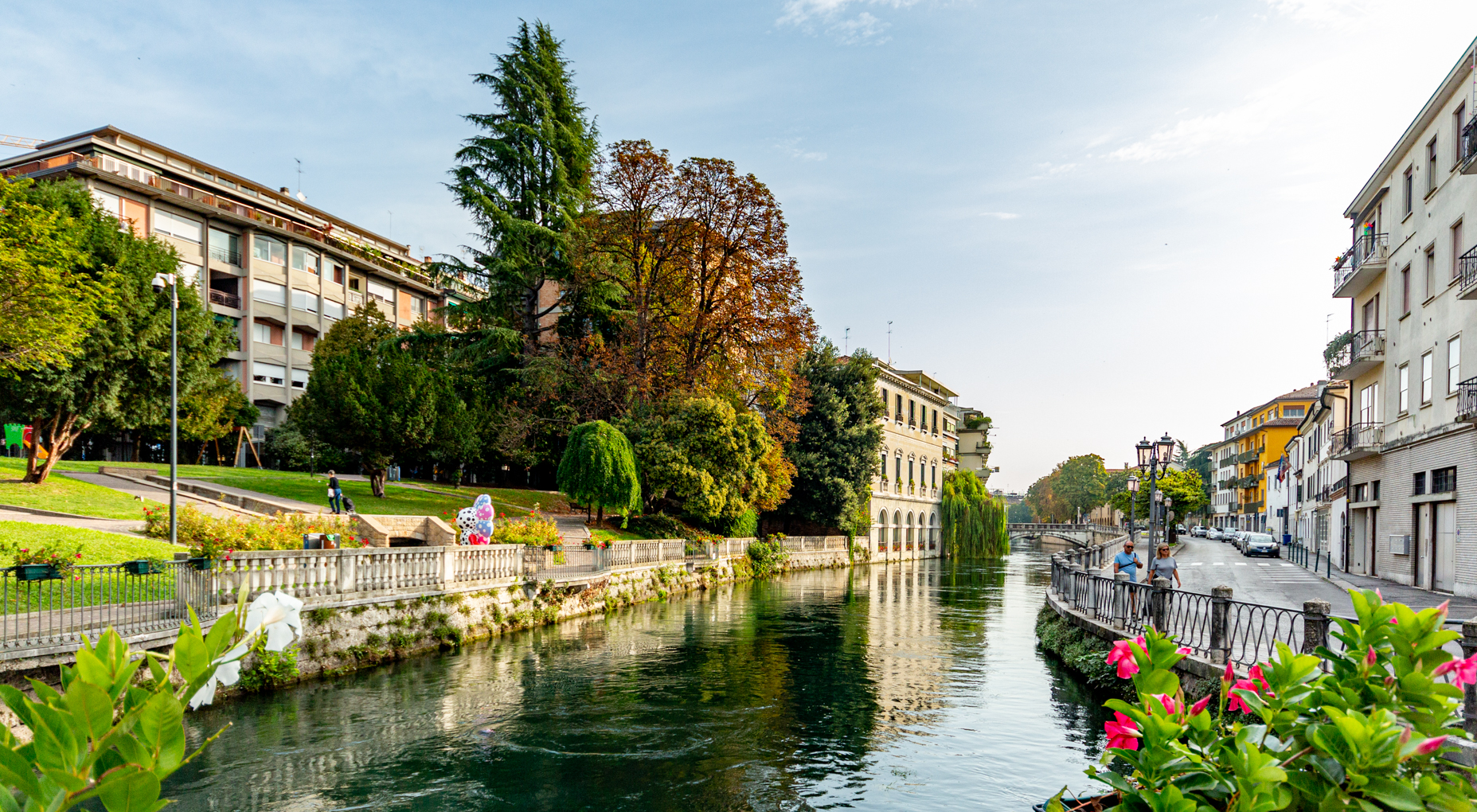 Treviso has the canals, the frescoed medieval buildings, the fish market on an island in the middle of a river, the osterie with local wine and cicchetti — and almost none of Venice's crowds. It is 30 kilometres from Venice by train and entirely different in atmosphere: a working city that happens to be beautiful, rather than a museum that happens to have residents.
It is also the home of prosecco (the Prosecco DOC hills begin just north of the city), radicchio (the bitter red chicory that turns up in every restaurant in the Veneto), and tiramisù (invented, with some controversy, in Treviso in the 1960s). For a city of 85,000 people, it punches exceptionally hard on food.
A weekend here — ideally as part of a wider Veneto self-drive — is one of the most satisfying short breaks in northern Italy.
What to see in Treviso — the essentials
The old city and the canals
Treviso's centro storico is small enough to walk entirely in an afternoon and large enough to keep you interested for a full day. The canals of the Sile and Cagnano rivers run through the medieval walls; the old water mills along the Cagnano canal are still partly intact. The Pescheria — the fish market on an island in the Cagnano, surrounded by the water on all sides — is open Tuesday to Saturday mornings and is one of the finest food markets in the Veneto.
The Cathedral and the Baptistery
The Duomo of Treviso is a working cathedral rather than a tourist monument: services are held daily, the light inside is soft and interesting, and the Annunciation by Titian (in the Malchiostro Chapel) is entirely unheralded. The Baptistery next door, a Romanesque structure of the 11th century, has a simplicity quite different from the ornate church interiors of Venice and Padua.
Piazza dei Signori
The central piazza is arcaded on three sides and dominated by the 13th-century Palazzo dei Trecento. In the early evening, at the aperitivo hour, every bar on the piazza fills with locals drinking prosecco or spritz with small plates of local snacks. Join them. This is how the city actually works.
What to eat and drink in Treviso
Tiramisù
The disputed invention of tiramisù is a matter of serious local pride. The most plausible origin story places it at Le Beccherie restaurant in Treviso in the late 1960s — made by the pastry chef Lina Campeol as a strengthening dish for new mothers. Whether or not you accept this provenance, eating tiramisù in Treviso — made with local mascarpone, Veneto savoiardi and good espresso — is an obligatory act.
Radicchio di Treviso
Radicchio Rosso di Treviso Tardivo — the elongated, intensely bitter winter variety — is one of the great seasonal ingredients of Italian cooking. In autumn and winter (it is harvested from November to March), it appears grilled, in risotto, in pasta, wrapped around sausage and roasted, or simply dressed with olive oil and salt. Outside this window, the round Chioggia radicchio is used instead.
Ask specifically for radicchio tardivo if you visit between November and March. It is meaningfully different from the round variety and worth seeking out.
Prosecco
The Prosecco DOC zone begins in the Treviso hills to the north and extends through the Conegliano-Valdobbiadene corridor. Many of the best producers are within 30 minutes of the city and welcome visitors for tastings. The Conegliano-Valdobbiadene Prosecco Superiore — the DOCG, from the steeper hillside vineyards — is significantly more complex than the commercial prosecco sold in supermarkets.
Cicchetti and the osterie
Treviso has a strong bacaro culture — small wine bars serving cicchetti (small snacks on bread) and sold-by-the-glass wines. The streets around the Pescheria market have several of the best. Arrive at 11am or 6pm, when the locals do.
Day trips from Treviso
Venice — 30 minutes by train
The train from Treviso Centrale to Venezia Santa Lucia runs every 30 minutes and takes 30–35 minutes. This makes Treviso a practical base for a day trip to Venice without paying Venice hotel prices — a significant saving in peak season.
Conegliano and the Prosecco Road
The Strada del Prosecco winds through the UNESCO-listed hills between Conegliano and Valdobbiadene — a 50-kilometre route of vineyards, small villages and cellar doors. Drive it in the afternoon and stop for a tasting at two or three estates. The views from the higher vineyards towards the Alps are extraordinary on clear days.
Asolo — the pearl of the Veneto
Asolo — a small hilltop town 35 kilometres north of Treviso — was once described by Robert Browning as 'the most beautiful town I have seen in Italy.' It is an overstatement, but not by much. The views from the Rocca fortress over the Treviso plain are remarkable, and the town is quiet, unhurried and almost entirely free of tourist infrastructure.
Practical information for a Treviso city escape
- Getting there: Treviso has its own airport (served by Ryanair from London Stansted and several other UK/Irish airports). Venice Marco Polo is 20 minutes by taxi.
- Getting around: the centro storico is walkable. Hire a car for the Prosecco Road and Asolo day trips — public transport is limited.
- When to go: April–June and September–October. Avoid August — the city empties as locals holiday.
- Where to stay: the centro storico has several good boutique hotels within walking distance of everything.
- Language note: the Treviso accent is broad Venetian dialect — quite different from standard Italian. Most people in the tourist economy speak good English.
Our Treviso City Escape includes 3 nights in a 4* hotel, food & wine tastings and airport transfers.
Explore the Treviso City Escape package →