
Top 10 Food Experiences in Sicily You Can't Miss (2026)
 Sicilian food is not just Italian food. It is a separate culinary tradition altogether — shaped by 2,500 years of Arab, Norman, Greek, Spanish and Bourbon influence into something genuinely unlike anything else on the peninsula. The Arab legacy alone — saffron, raisins, pine nuts, caponata, granita, cassata — gives Sicilian cooking a sweet-sour-savoury complexity that is entirely its own.
Any food holiday in Sicily should be built around experiences, not just restaurants. Here are the ten we recommend to every client.
1. Eat arancini in Palermo's Ballarò market
Ballarò is one of the oldest and largest street markets in Europe, a labyrinthine quarter of Palermo's old city that has been in continuous operation since the Arab occupation in the 9th century. The food here — stigghiola (grilled offal on skewers), panelle (chickpea fritters), sfincione (the original thick Sicilian pizza) — is as far from tourist food as it is possible to get.
Arancini — fried rice balls stuffed with ragù, mozzarella and peas — are the definitive Palermo street food. They are served at room temperature from market stalls and bars throughout the city. The ones in Ballarò, made fresh that morning, are the standard against which all others should be judged.
2. Eat a full Palermitan breakfast
A Palermo breakfast is a granita (semi-frozen almond, coffee, pistachio or mulberry, depending on the season) with a fresh brioche, eaten standing at a bar counter. The granita is made in-house; it is not a slush puppy. The brioche is soft, slightly sweet, pillowy. Together they constitute one of the great breakfasts in Europe.
The best granita in Palermo is a matter of fierce local debate. Any bar that makes its own almond granita — you can usually see the machine behind the counter — is the right place.
3. Attend a fish auction in Catania
The pescheria of Catania — the fish market behind the Cathedral of Sant'Agata — opens at dawn and is, by 7am, a full-volume spectacle of swordfish, tuna, sea urchins, cuttlefish, clams and dozens of species without English names. The auctioneer shouts, the fishmongers shout back, and by 9am it is largely over.
Several of the restaurants immediately surrounding the market buy directly from it and open for lunch. The seafood pasta here — spaghetti ai ricci di mare (sea urchin), pasta con le sarde (with sardines, wild fennel and saffron), pasta alla Norma (with aubergine and salted ricotta) — is as good as it gets.
4. Visit a pistachio grove in Bronte
Bronte, on the western slope of Mount Etna, produces what is widely considered the finest pistachio in the world: the Pistacchio Verde di Bronte DOP. The volcanic soil gives it an intense, resinous flavour entirely unlike the pale pistachios sold in supermarkets. The harvest happens every two years, in September, and is a significant local event.
Several growers in Bronte offer visits to the groves and tastings of pistachio products — pesto, liqueur, ice cream, chocolate. The drive up from Catania through the lava fields of Etna is itself worth the journey.
5. Take a cooking class in a Sicilian home
The most direct way into Sicilian food culture is to learn to make it with someone whose grandmother made the same dishes. Our Cooking in Sicily package is based around exactly this: a small-group class in a private home kitchen, taught by a local chef, using produce from the morning market.
The curriculum changes with the season: in spring, fresh ricotta and broad beans; in summer, caponata and pasta con le melanzane; in autumn, porcini mushrooms from the Nebrodi mountains and the first new olive oil. The class ends with lunch at the table where you cooked.
6. Eat cannoli where they were invented
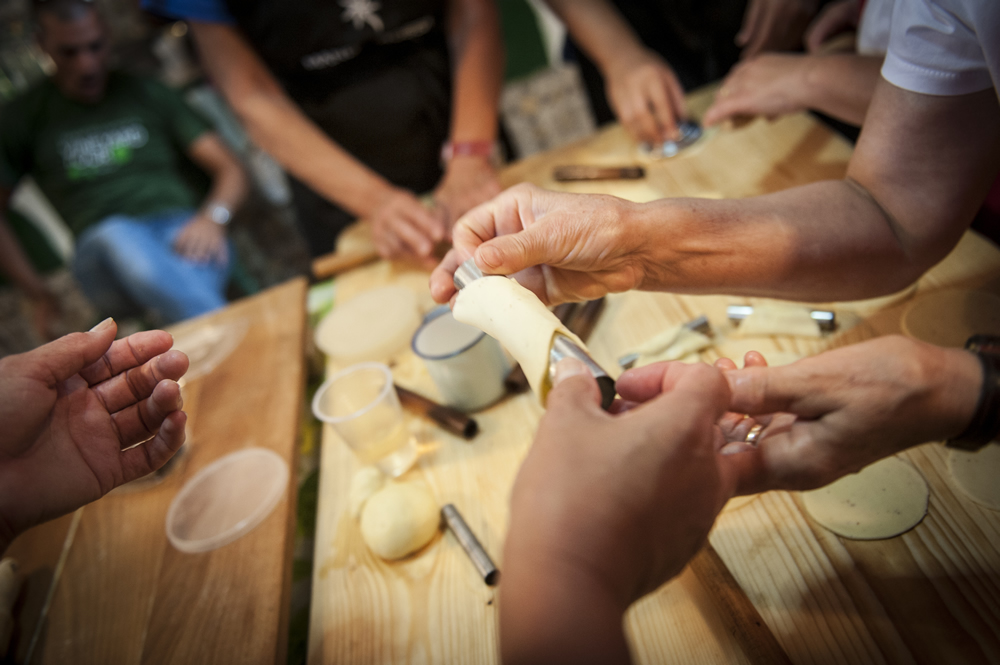
The cannolo was invented in the Arab-Norman period, most likely in the Palermo area, as a Carnival sweet. The shell — fried pastry rolled around a metal tube — is filled with sweetened sheep's milk ricotta, candied citrus peel and chocolate chips.
The key difference between a good cannolo and a bad one is that the shell is filled to order, not in advance. A shell that has been sitting filled for more than an hour becomes soggy. The best cannoli in Sicily are filled at the counter while you wait. Ask for them senza glassa (without the lurid green icing) if you want the pure version.
7. Drink wine on the slopes of Etna
The wines of Etna — produced on volcanic soils at altitude, from ancient nerello mascalese and carricante vines, many of them pre-phylloxera — have attracted international attention in the past decade. The best are genuinely extraordinary: mineral, complex, with a finesse more reminiscent of Burgundy than of what most people expect from a Sicilian wine.
The contrade (named vineyard districts) of the north and east faces of Etna are the most prized. Several producers offer tastings and cellar visits: Benanti, Cornelissen, Passopisciaro, Terre Nere. Book in advance.
8. Try a traditional spit-roast in the Madonie mountains
The Madonie — the mountains south of Cefalù in north-central Sicily — are a protected natural park and one of the most overlooked regions on the island. The cooking here is mountain cooking: slow-roasted lamb, goat, pork; aged provola and caciocavallo cheeses; wild mushrooms from the oak forests; honey from hives on the high pastures.
Lunch in an agriturismo in the Madonie — under a pergola, with a carafe of local wine and three or four courses served without a menu — is the kind of meal that stays with you.
9. Eat granita on the beach at Mondello
Mondello is the beach resort of Palermo — a strip of white sand flanked by Art Nouveau bathing establishments, 15 minutes by bus from the city centre. It is not undiscovered. But eating granita al limone at one of the beach bars, in the shade, after a swim in the Tyrrhenian Sea, is a specifically Sicilian pleasure that has no equivalent elsewhere.
10. Attend a sagra — a local food festival
Sicily has a sagra for almost every ingredient and season: the Sagra del Pistacchio in Bronte (September), the Couscous Fest in San Vito lo Capo (September), the Olive Oil Festival in Castelvetrano (November), the Almond Blossom Festival in Agrigento (February). These are local festivals, not tourist events: the food is cooked by the people who produce it, and the price of a full meal is typically under €20.
Our Cooking in Sicily package builds a hands-on food experience into a full island itinerary. Places are limited.
Explore the Cooking in Sicily holiday →