
Sardinia Self-Drive Holiday: The Ultimate Road Trip Guide (2026)
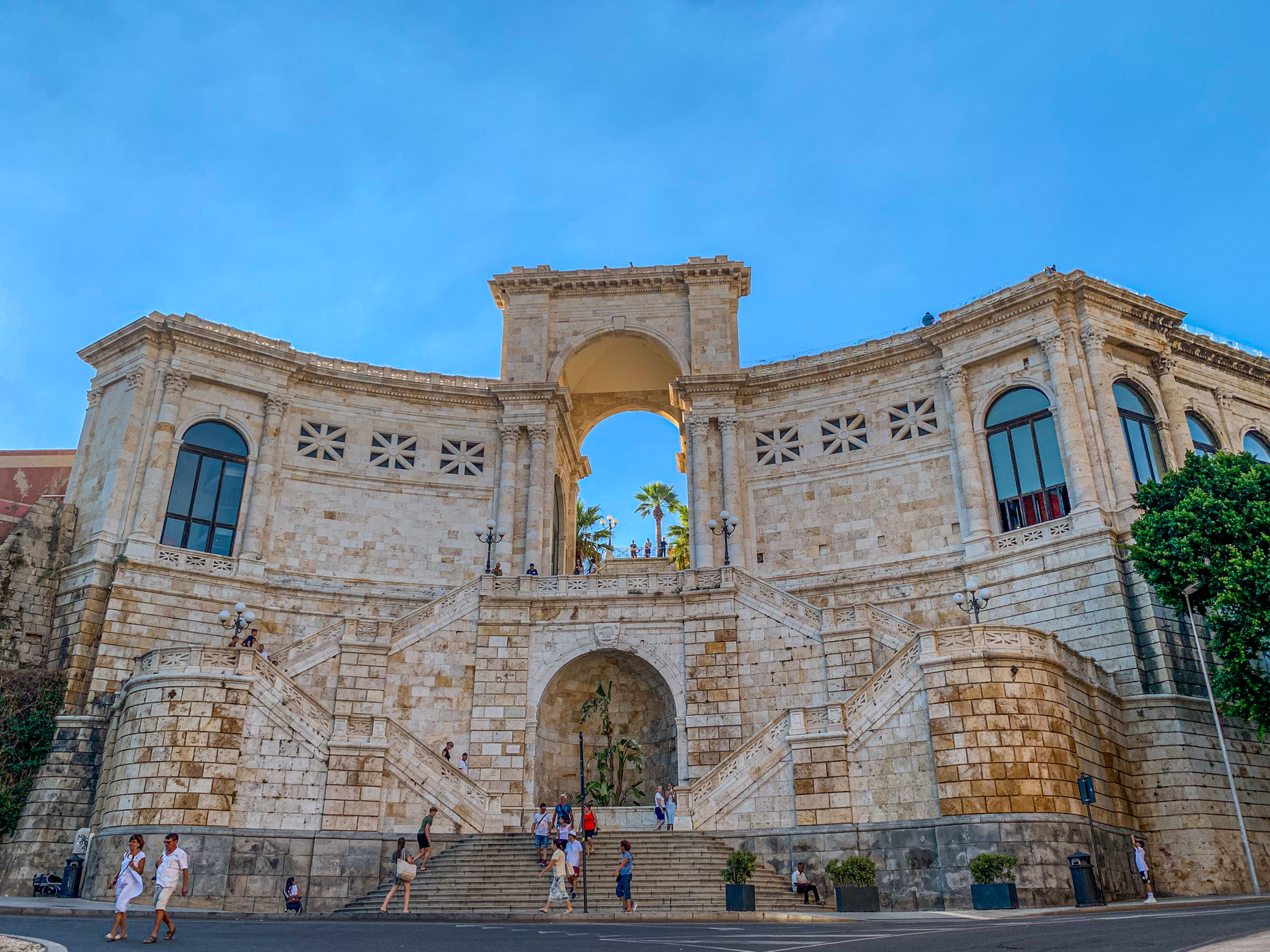 Most visitors to Sardinia stay put. They find a beach, lay out a towel, and don’t move for a fortnight. And while Sardinia’s beaches are genuinely among the finest in Europe, this approach misses almost everything that makes the island extraordinary.
Sardinia is a place of startling contrasts: turquoise sea and grey granite mountains, ancient Bronze Age towers and baroque hilltop towns, fragrant maquis scrubland and bottomless gorges. The only way to see any of it — outside the handful of tourist towns — is by car.
A self-drive holiday in Sardinia is not just the best way to see the island. It is, for most of it, the only way. Here is everything you need to know to do it well.
Why Sardinia is perfect for a self-drive holiday
Sardinia is Italy’s second-largest island and one of its most sparsely populated regions. Outside the coastal resort areas of the Costa Smeralda, the Orosei Gulf and Chia, public transport is limited to infrequent buses between major towns. The interior — the Barbagia highlands, the Ogliastra coast, the Gennargentu mountains — is essentially inaccessible without a car.
But the roads are a pleasure. The SS125 “Orientale Sarda”, running down the eastern coast, is one of the great scenic drives of the Mediterranean. The mountain roads of the Gennargentu are empty, winding and spectacular. Even the main roads have remarkably little traffic outside August — a freedom quite unlike driving in Tuscany or the Amalfi Coast.
Driving standards are good, petrol stations are reasonably well spaced on the main roads (fill up when you can in the interior), and the island’s compact size means you can cross from coast to coast in under two hours.
The best Sardinia self-drive road trip route — 9 days
Days 1–2 — Arrive Alghero: the Catalan city
Fly into Alghero in the north-west — well-connected from the UK and Ireland — and spend your first two days exploring one of Sardinia’s most atmospheric towns. The medieval centre is ringed by sea-facing walls; the dialect is still partly Catalan; the seafood — particularly the local lobster — is exceptional.
Day trip suggestion: the Grotta di Nettuno sea caves, accessible by boat or by a vertiginous 654-step staircase down the Capo Caccia headland.
Days 3–4 — Bosa: the hidden riverside town
Drive south along the coast road to Bosa — one of Sardinia’s most beautiful and least-visited towns. A cluster of pastel houses climbing a hillside above the Temo river, crowned by a Malaspina castle with extraordinary views. The local malvasia wine is produced nowhere else on the island.
This road — the SP49 coastal route between Alghero and Bosa — is itself one of the highlights of the trip: 45 kilometres of cliff road with almost no development.
Days 5–6 — Nuraghe and the Barbagia interior
Head inland to the Barbagia — the rugged highland heartland of Sardinia. This is the least-visited and most authentically Sardinian part of the island. Stop at the Nuraghe Su Nuraxi near Barumini — a UNESCO World Heritage Bronze Age complex that predates Rome by a thousand years.
The Barbagia towns of Orgosolo are famous for their political murals — hundreds of painted scenes covering entire building facades, stretching back decades. Lunch in a local agriturismo: roast suckling pig (porceddu), pecorino, pane carasau flatbread.
Days 7–8 — The Ogliastra coast and the Gorropu Gorge
The east coast between Baunei and Arbatax is widely considered the most dramatic coastal scenery in Italy. The road descends in hairpin bends to isolated coves — Cala Goloritzé, Cala Mariolu, Cala Luna — most only reachable on foot or by boat.
For active travellers: the Gola Su Gorropu, sometimes described as Europe’s Grand Canyon, is a day walk from the Flumineddu valley — slot canyons up to 500 metres deep.
Day 9 — Costa Smeralda and departure
Drive north to the Costa Smeralda — Sardinia’s famous jet-set coast, built from scratch in the 1960s by the Aga Khan. Porto Cervo is flashy and expensive, but the headlands around it — Capriccioli, Romazzino, La Celvia — have some of the most purely beautiful water in the Mediterranean. Fly home from Olbia.
Best beaches in Sardinia for self-drive explorers
The beaches most worth seeking out are precisely those that don’t appear in every travel magazine — accessible only by driving to a car park, then walking a track through maquis scrubland.
- Cala Brandinchi (near San Teodoro) — often called ‘the Tahiti of Sardinia’ for its white sand and flat turquoise sea
- Is Arutas (near Oristano) — a beach of quartz grains rather than sand, shimmering pale green-white
- Porto Flavia (near Iglesias) — a mining port carved directly into the cliff face above a turquoise cove
- Spiaggia di Tuerredda (near Teulada) — a near-perfect arc of white sand with a small lagoon behind it
- Cala Goloritzé (Golfo di Orosei) — a two-hour walk from the cliff road, but frequently listed among Europe’s finest beaches
When to visit Sardinia on a self-drive holiday
June and September are the optimal months: warm enough to swim (sea temperature 22–25°C), but without the crushing heat and crowds of July and August. The interior roads in particular become punishingly hot in midsummer.
May is excellent for driving and walking; the island is green from winter rain and wildflowers are still out. October is ideal for inland exploration — the coast empties but the mountains and villages are at their most atmospheric.
Avoid August if possible. Most of mainland Italy descends on Sardinia in August and room rates triple. Some of the island’s finest restaurant’s are fully booked weeks in advance.
Practical tips for self-driving in Sardinia
- Car hire: collect at the airport (Alghero, Cagliari or Olbia). Book in advance; availability is limited in peak season. Our Sardinia package includes pre-arranged car hire.
- Fuel: fill up at every opportunity in the interior. Petrol stations in the Barbagia and Ogliastra are sparse.
- Road type: the SS125 eastern coastal road and the interior mountain roads are often single-track. Drive slowly and use passing places.
- ZTL zones: the historic centres of Alghero, Oristano and Sassari have restricted traffic zones.
- Accommodation: book your hotel well ahead for June. September is easier but still warrants advance planning.
How to book a Sardinia self-drive holiday with Best Holidays in Italy
Our Sardinia self-drive package includes pre-arranged car hire, a bespoke day-by-day itinerary built around your interests, and pre-booked accommodation at handpicked properties — from coastal boutique hotels to inland agriturismo.
Departure dates run from May through October. We can extend or customise any itinerary — add a hiking day in the Gorropu, a cooking class in Orgosolo, or a boat trip to Cala Goloritzé.
|
Ready to explore Sardinia at your own pace? Our local specialist will build your ideal road trip itinerary. |