
Italy's Most Beautiful Hilltop Towns: Our Local Picks (2026)
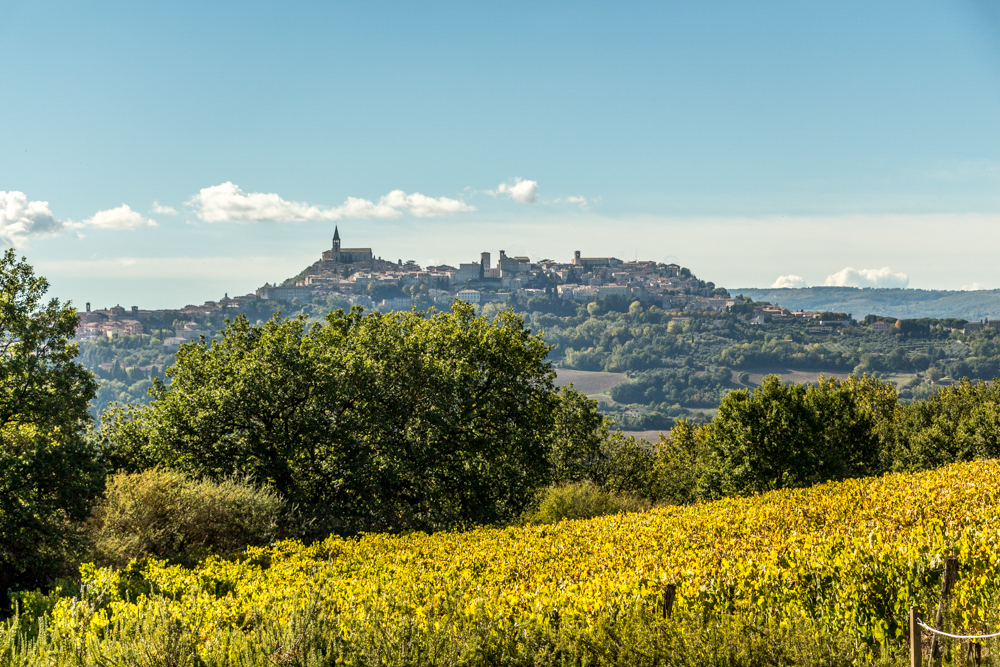 Italy has an extraordinary number of them. This is partly geography — a long, thin country of mountains and plains, where hilltops were simply the safest place to build for most of recorded history. And partly history: the medieval period created hundreds of fortified towns that sit, centuries later, on their ridges and cliffs exactly as they were built.
The famous ones — San Gimignano, Orvieto, Montepulciano — are beautiful and worth visiting. They are also, in high season, extremely busy. Here are the ones we send our clients to: the well-known, the underrated, and the genuinely unknown.
The classics — famous for good reason
San Gimignano, Tuscany
The 'medieval Manhattan' — fourteen surviving towers of a city that once had 72 — rising from the Chianti hills south of Florence. In the morning before the tour buses arrive, it is genuinely magical. The Vernaccia di San Gimignano — a dry white wine made here since the 13th century — is the right thing to drink at lunch under the walls.
Visit in April, May or October. In August it is almost unnavigable.
Orvieto, Umbria
Built entirely on a rectangular plug of volcanic tufa, Orvieto is visible from the A1 autostrada and from the train between Florence and Rome. The Duomo — a Gothic facade of extraordinary gold mosaics and carved marble reliefs — is one of the finest buildings in Italy and catches almost no one's attention because it sits in a town that most people pass through rather than stop at.
The Orvieto underground — a network of Etruscan tunnels and medieval cellars carved into the tufa beneath the town — is open for guided tours daily.
The underrated — deserving far more visitors
Spello, Umbria
Spello sits on the lower slopes of Monte Subasio, ten minutes from Assisi, and is visited by a fraction of the tourists who go to its more famous neighbour. The town is covered in flowers — literally: the locals maintain window boxes, courtyard gardens and doorstep arrangements with competitive intensity. In June, the Infiorata festival covers the main streets entirely in flower-petal designs.
Eat: lunch at one of the trattorie near the Porta Consolare; the black truffle from the nearby Valnerina is on almost every menu.
Locorotondo, Puglia
Locorotondo is built in a perfect circle on a low hill in the Valle d'Itria, surrounded by trulli and dry-stone walls. The old town is entirely whitewashed — by civic regulation — with pink geraniums on every balcony. It is ten minutes from Alberobello and a fraction as visited. The local white wine (DOC Locorotondo) is crisp, mineral and excellent.
Civita di Bagnoregio, Lazio
Connected to the modern town of Bagnoregio by a single pedestrian bridge over a ravine, Civita sits on a crumbling tufa outcrop that is slowly, literally, falling away. It has twelve permanent residents. The experience of crossing the bridge and entering the medieval lanes — almost no cars, almost no shops, a single restaurant and a single bar — is unlike anything else in Italy.
Go on a weekday in April, May or October. In August the bridge queues stretch back into Bagnoregio.
The unknown — our specialists' personal picks
Gerace, Calabria
One of the least-visited regions of Italy, Calabria has a hilltop town of extraordinary quality in Gerace — a former Byzantine stronghold at 500 metres above the Ionian coast. The Norman cathedral is one of the largest in Calabria; the views from the cliff edge reach the sea. The town has perhaps 2,700 residents and, in summer, almost no tourists.
Vico del Gargano, Puglia
The Gargano promontory — the 'spur' of the Italian boot — has several hill towns, but Vico del Gargano is the finest. An orange- and lemon-producing town of medieval lanes with a 14th-century castle and walls. It appears on almost no tourist itinerary despite being, objectively, one of the most beautiful small towns in southern Italy.
Bagnone, Tuscany
In the Lunigiana — the mountainous northern tip of Tuscany between the Ligurian Apennines and the Apuan Alps — Bagnone is a perfectly preserved medieval village above the Bagnone river gorge. Almost no non-Italian visitors. The castle is accessible and the view of the gorge from the walls is spectacular.
Civitacampomarano, Molise
Molise is Italy's second-smallest and least-visited region, and Civitacampomarano is perhaps its finest town — a ghost-town-in-progress saved each summer by a street art festival (CVTad) that invites international artists to paint murals on its slowly emptying houses. The result is genuinely extraordinary: medieval lanes covered in contemporary art, with maybe 400 permanent residents and a castle that has been there since the 14th century.
How to visit Italy's hilltop towns on a self-drive holiday
Almost all of these towns are best reached by car. Many are technically accessible by bus, but the services are infrequent, the journey times long, and the ability to stop when you want — at a viewpoint, at a vineyard, at a roadside sagra — entirely missing. A self-drive itinerary through Umbria, Puglia or the lesser-known corners of Tuscany and Calabria is the natural way to visit three or four of these towns in a week.
Want to build a self-drive itinerary around Italy's most beautiful hilltop towns? Our specialists know the routes the guidebooks don't.
Enquire about a bespoke Italy self-drive holiday →